
How to Choose a HIPAA-Compliant IT Provider in South Florida
Practice managers: here is what to ask an MSP about BAAs, risk assessments, encryption and Florida FIPA breach rules before you sign. Verify, don't just trust.
Read
Learn how HOA boards and property managers can back up gate controllers, clubhouse servers, and resident data before hurricane season hits South Florida.
HB 293 changed the rules for Florida HOAs, but most boards are still thinking about hurricane prep the way they did five years ago — shutters, generators, a phone tree. That's not enough anymore. Gate access controllers, clubhouse servers, and resident databases are just as vulnerable to a storm as your roof, even though the law itself is aimed at physical structures — protecting them still falls under the board's broader fiduciary duties. This post walks through what an HOA board actually needs to do — before, during, and after storm season — to keep gate systems, networks, and resident records intact.
Florida HB 293, signed into law and effective immediately on May 28, 2024, requires homeowners associations to adopt hurricane protection specifications for physical structures — things like shutters, impact glass, and doors — to help parcel owners protect their property. It doesn't reach into gate systems, databases, or communication protocols. But that doesn't let the board off the hook: protecting gate systems, clubhouse networks, and resident databases falls under the board's broader fiduciary duties and its official records maintenance requirements under Florida Statute 720.303, the same responsibility that covers shutters and generators.
The stakes are real. An HOA that loses its gate access system, its clubhouse network, or its resident records for an extended stretch isn't just inconvenienced — it can mean a special assessment to replace fried equipment, weeks of property-management operations grinding to a halt, and real liability exposure if a stuck gate blocks an ambulance or fire truck. Yet despite record storm costs, 69% of small businesses have no formal disaster plan at all, according to a U.S. Chamber of Commerce Foundation and Verizon survey.
For a gated community in Boca Raton or Delray Beach, the "amenities" framing doesn't hold up. The gate is security. The clubhouse network is how the board communicates and how dues get processed. Treating them as afterthoughts is how a storm turns into a liability claim.
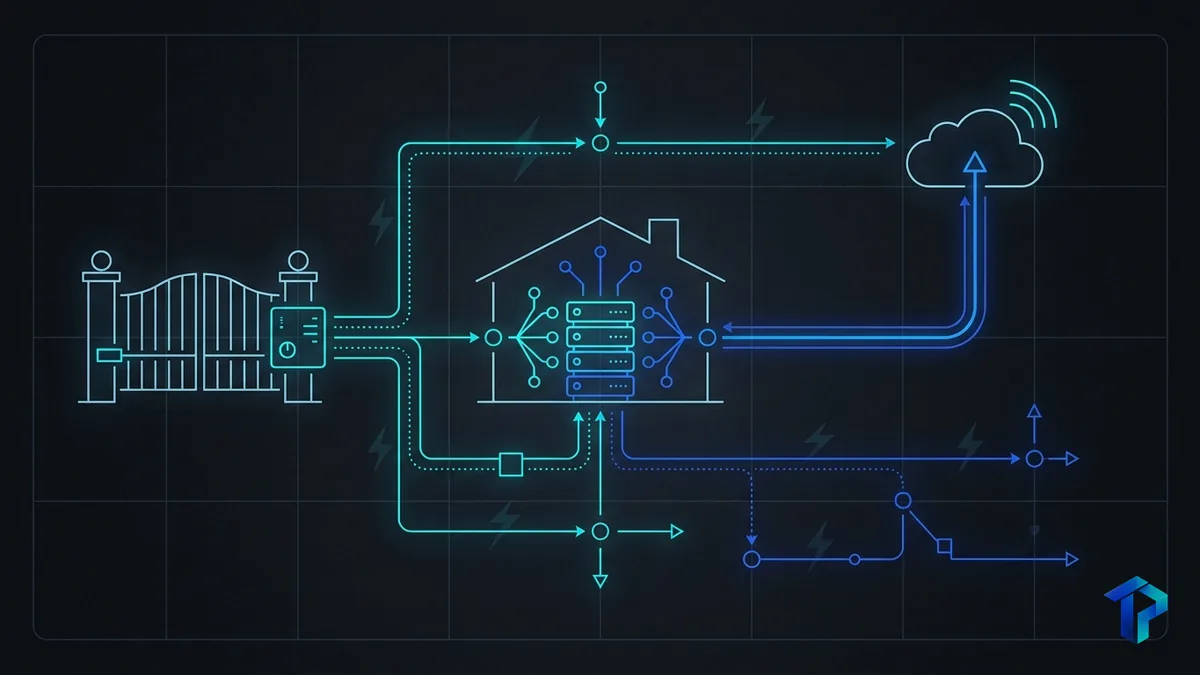
Gate systems are usually the first thing residents notice when something goes wrong — and the first thing boards forget to back up. Before storm season ramps up, export and save a current copy of your gate controller configuration, resident access codes, and credential lists. Store that copy somewhere other than the on-site controller box, so a flooded gatehouse doesn't mean starting from zero.
Backup power matters just as much. Telecom-connected equipment — including gate controllers tied into phone or internet lines — is subject to FCC expectations around emergency backup power for connected assets normally run off utility electricity. In practice, that means confirming your gate arms and card readers actually have working battery backup, not just a sticker that says they should.
A gate that can't open without electricity isn't a security feature during a storm — it's a hazard.
Because power and connectivity both fail during hurricanes, every gated community needs a documented manual override procedure. Guards and residents should know, in advance, how entry works if the keypad and card reader go dark. Installing manual override mechanisms on electric gate operators — so gates can be physically opened without power — is a small project that prevents a real bottleneck during an evacuation.
Finally, protect the hardware itself. Controller boxes and any networking gear near the gate should be shielded from flooding and wind-driven debris, not left exposed at ground level in a low-lying entrance.
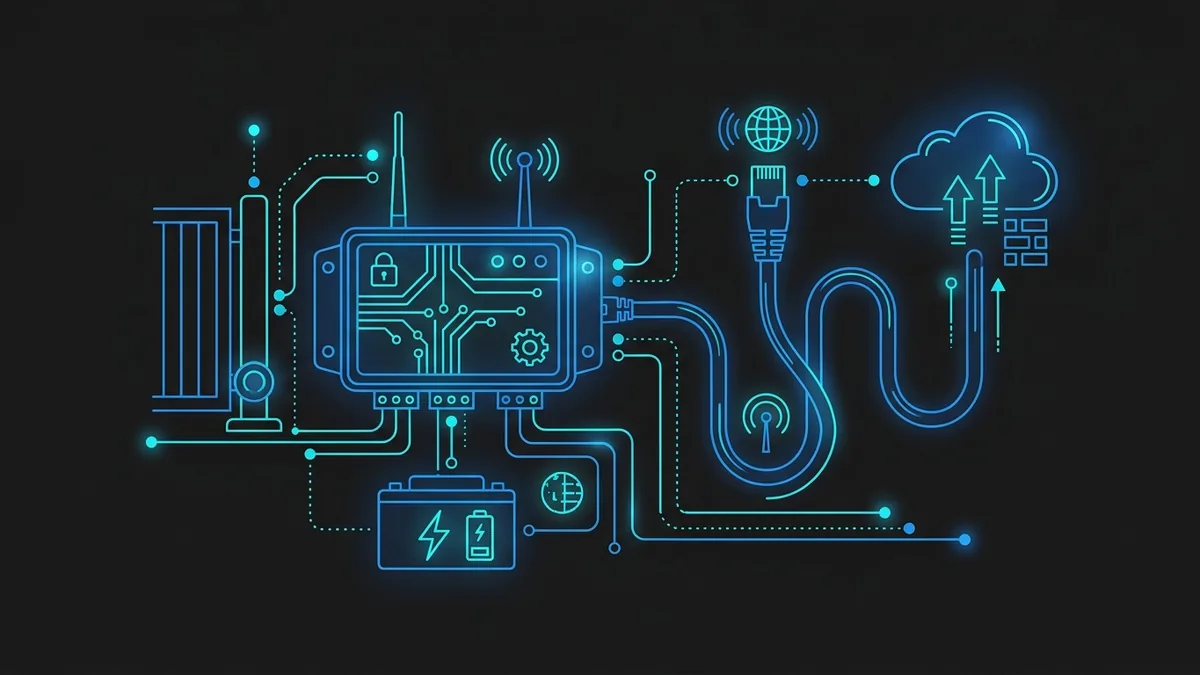
The clubhouse is usually where an HOA's real infrastructure lives — servers running management software, switches, Wi-Fi access points, and often the only internet connection tying the property together. Before storm season, take a full inventory of that equipment. You can't protect what you haven't documented, and if the board turns over, undocumented hardware is quickly forgotten hardware.
UPS battery backup and surge protection should sit between that equipment and the wall outlet. The same FCC backup power expectations that apply to connected telecom equipment are a useful benchmark here — the goal is to bridge short outages and prevent damage during power surges when electricity flickers back on. Checking the UPS's self-test logs regularly, and scheduling an annual professional battery load test, tells you whether critical systems actually stay online — instead of finding out mid-storm.
It's also worth segmenting the clubhouse network from the gate and security systems. If one side gets compromised or knocked offline, the other shouldn't automatically go down with it. This kind of network segmentation for gate systems limits how far a single failure — or a single intrusion — can spread.
Label cables and equipment clearly, and store routers and switches on elevated or wall-mounted shelving above typical flood levels for your area. And make sure someone — your board or your clubhouse server infrastructure support provider — can monitor that equipment remotely, so problems can be caught and addressed before and after the storm without waiting for someone to physically drive to the property.
Resident databases — dues records, violation history, contact information — are the data an HOA genuinely cannot afford to lose. CISA recommends the 3-2-1 rule for backing up business data: three copies, on two different types of media, with one copy stored offsite or offline. That same principle applies directly to gate-access data and clubhouse network configurations, not just resident records.
NIST's Cybersecurity Framework reinforces this with control PR.DS-11, which specifies that backups must be created, protected, maintained, and tested. A backup nobody has verified in a year isn't a real backup — it's a guess.
This matters even outside hurricane season. Verizon's 2025 Data Breach Investigations Report found that ransomware factored into 44% of the breaches it investigated, which means a tested backup isn't just storm insurance — it's ransomware protection for HOAs too. A community that loses its resident portal to a storm and one that loses it to an attack face the same recovery problem: do the backups actually work?
Confirm that resident portals, dues and payment records, and compliance or violation databases are backing up automatically to the cloud, not relying on someone remembering to run a manual export before the storm hits.
A hurricane disaster recovery plan for an HOA doesn't need to be complicated, but it does need to be written down and specific. Start by aligning it with the board's actual legal authority: Florida Statute 720.316 (and 718.1265 for condo associations) gives boards emergency powers to suspend services and restrict access during declared emergencies. Your IT plan should tell the board exactly how and when to use that authority for gate and network systems.
Assign roles clearly:
Access control continuity belongs in the plan too. Most HOAs outsource day-to-day operations to a property management company rather than carrying direct payroll, so the bigger risk is access control records becoming unreachable — the board should confirm gate and credential data stay accessible in the cloud, not just on a de-powered on-site controller, so the community doesn't end up stuck on manual overrides longer than necessary.
Keep a printed contact list of board members and essential vendors in a waterproof folder at both the gatehouse and clubhouse — cell towers go down, and a laminated page doesn't need signal. Schedule a pre-season IT readiness review every year, and test recovery procedures after the storm passes, not just before it arrives.
Hurricane prep isn't a once-a-year checklist — it's a habit built on backups that actually get tested, monitoring that catches problems early, and a plan the board can follow without scrambling. That's what ongoing HOA and property management IT support is for: someone watching the gate controllers, the clubhouse servers, and the resident database all year, not just in June.
As a South Florida company, we've seen what a direct hit does to gated communities from Boynton Beach to West Palm Beach. If you're looking for an IT provider that actually understands HOA operations — and not just generic office IT — we're glad to help, including cloud failover strategies for storms that keep your systems reachable even when the power doesn't come back right away.
Ready to see where your community stands? Request a free IT assessment focused on hurricane readiness, and let's find the gaps before the next storm does.
Export and store copies of your gate controller configuration, access codes, and resident credential lists both locally and offsite or in the cloud, and physically protect controller enclosures from flooding and wind debris. Confirm the system has working battery backup, and document a manual override or key-based entry procedure that security staff and residents understand in advance, so entry doesn't stop the moment power or connectivity fails.
Start with a full inventory of servers and networking equipment, then add UPS battery backup and surge protection to prevent damage during outages. Segment the clubhouse network from gate and security systems, and set up remote monitoring so issues can be diagnosed without an on-site visit.
Follow the CISA-recommended 3-2-1 rule: keep three copies of resident data across two different media, with at least one copy stored offsite or offline. Backups should also be tested regularly, per NIST CSF control PR.DS-11, so they're actually usable if the primary system is damaged or hit by ransomware.
Florida's HB 293, effective immediately upon signing on May 28, 2024, requires HOAs to adopt hurricane protection specifications for physical structures like shutters, impact glass, and doors — it doesn't regulate IT systems or communication protocols. Protecting gate systems, servers, and resident data instead falls under the board's fiduciary duties and its official records maintenance requirements under Florida Statute 720.303, and pairing that with the emergency powers in Florida Statute 720.316 creates a strong framework for acting quick
Practice managers: here is what to ask an MSP about BAAs, risk assessments, encryption and Florida FIPA breach rules before you sign. Verify, don't just trust.
Hurricanes knock out wired internet fast. Here's how dual-WAN cellular failover keeps Boca Raton businesses running when storms hit.
Start with a free IT assessment — a clear, no-pressure look at where things stand and what managed IT could do for you.